
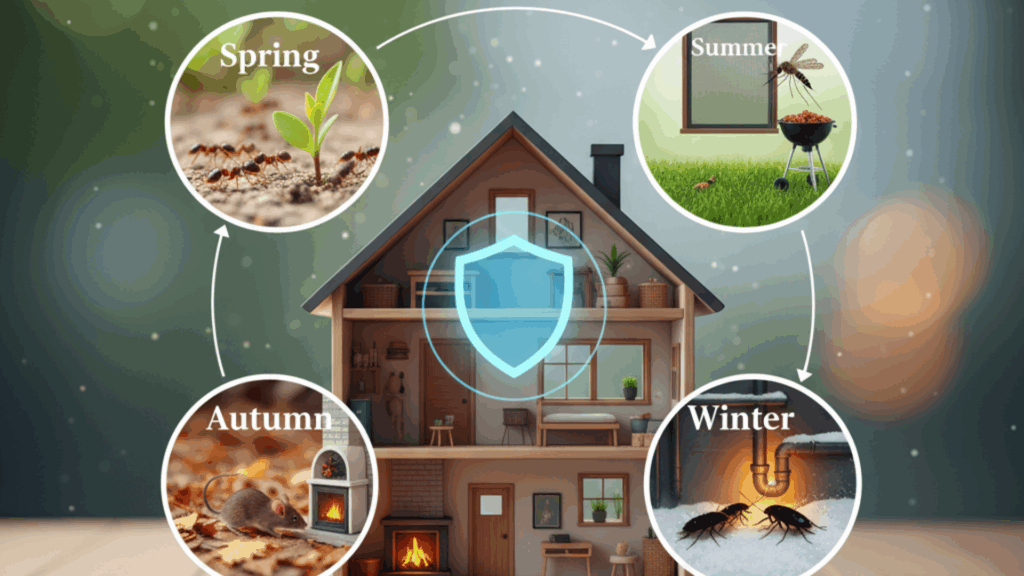
Cooler weather does not end pest pressure. It changes where pests hide—and that changes how we protect your home.
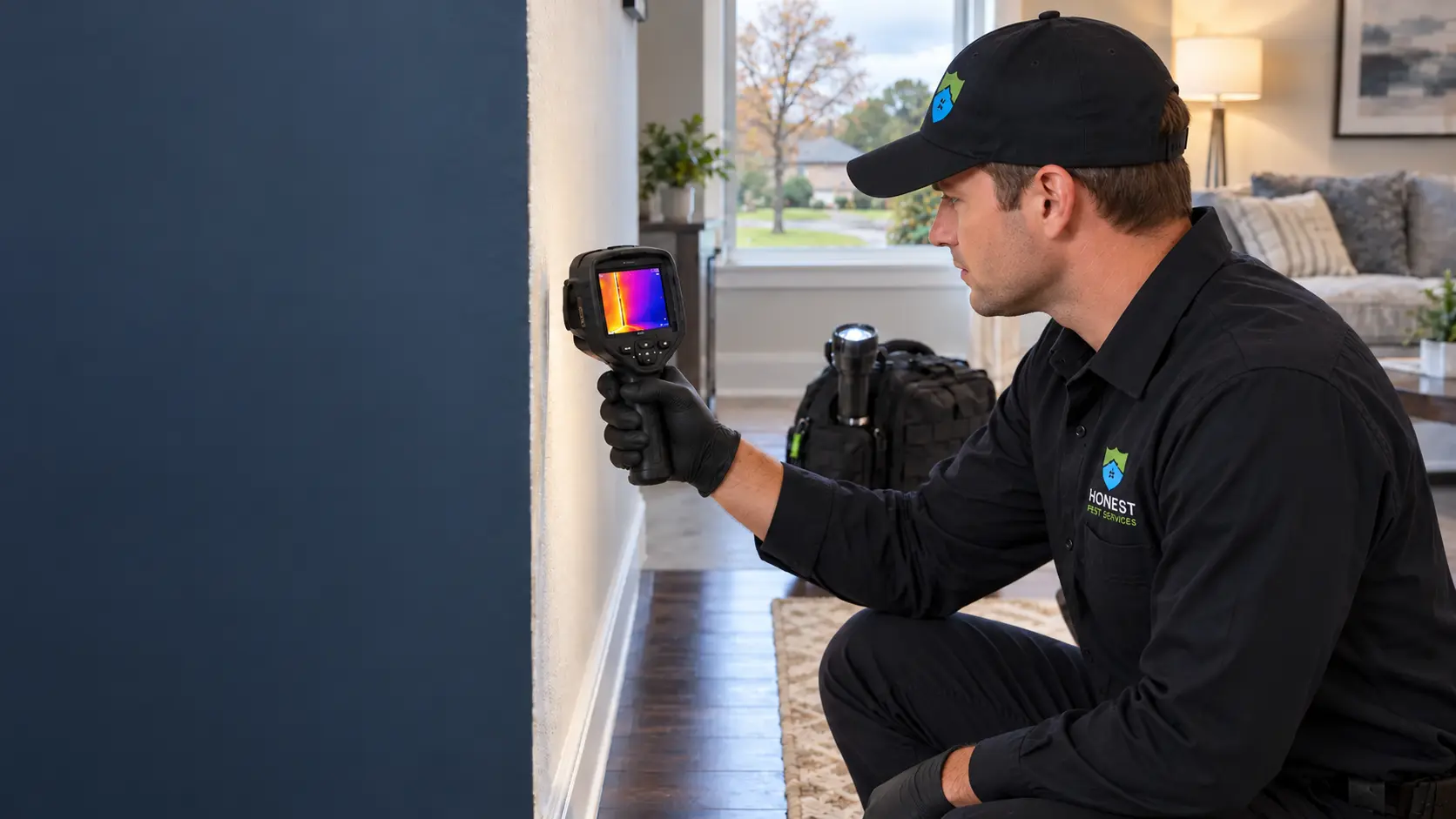
Did you know pest activity does not stop in winter? Most homeowners are not Certified Applicators or entomologists—and they should not have to be. Our job is to explain what changes, show you what we find, and stay proactive before a hidden problem becomes an infestation.
Year-round protection does not mean repeating the same treatment twelve times. It means adjusting the strategy as pest behavior, weather, moisture, and pressure change around your property.
Pest pressure changes with every season
Texas weather keeps pest activity moving. Each season creates a different set of risks, so an effective protection plan must move with it.
- Spring — Swarm Season: Ants, termites, mosquitoes, spiders, and stinging insects become more visible as temperatures rise.
- Summer — High Season: Heat and humidity increase pressure from mosquitoes, fleas, ticks, cockroaches, ants, and earwigs.
- Early Fall — Prep Season: Spiders, rodents, ants, and occasional invaders begin using protected routes and entry points.
- Late Fall and Winter — Shelter Season: Rodents, indoor cockroaches, silverfish, spiders, pantry pests, and mosquitoes on warm days remain active.
As temperatures begin to cool, insects and other pests start looking for protected spaces. Exterior activity may become less obvious, but wall voids, plumbing penetrations, weep holes, attics, garages, and moisture-prone areas can become the routes and harborage points pests use through fall and winter.
That is why Honest Pest Services does not perform the same treatment every month of the year. From November through February, your General Pest Protection Plan shifts from broad seasonal prevention to precision inspection, targeted treatment, and monitoring.
Which pests are active from November through February?
Houston does not experience a long, consistent freeze, so winter is not a complete shutdown for pests. Activity changes with temperature, rainfall, moisture, and the protected conditions available around each property.
During these months, our most common concerns include:
- American and smokybrown cockroaches moving into wall voids, garages, attics, plumbing areas, and other protected spaces. German cockroaches can remain active indoors throughout the year.
- Ants, including carpenter ants and other household species, using sheltered routes around foundations, walls, plumbing penetrations, trees, and moisture sources. Carpenter ants are often noticed again in late winter as reproductive activity begins.
- Spiders and silverfish remaining active in garages, attics, bathrooms, storage areas, and wall voids where moisture or insect prey is available.
- Roof rats and mice investigating gaps around rooflines, soffits, garage doors, utility penetrations, and siding as they look for shelter, food, and nesting locations. Rodent-related problems are commonly reported during fall and winter.
- Clover mites and other occasional invaders appearing around windows and exterior entry points, especially as late winter begins transitioning toward spring.
- Pantry pests, including moths and beetles, remaining active indoors where stored foods provide warmth and a dependable food source.
- Mosquitoes continuing or quickly returning during Houston’s warm winter stretches, particularly where rain, irrigation, shade, or standing water provides suitable conditions.
The exact pest pressure is different from home to home. Our job is to identify what is actually happening at your property and adjust the service accordingly.
Winter pest watch
Outdoor cockroaches — protected wall spaces
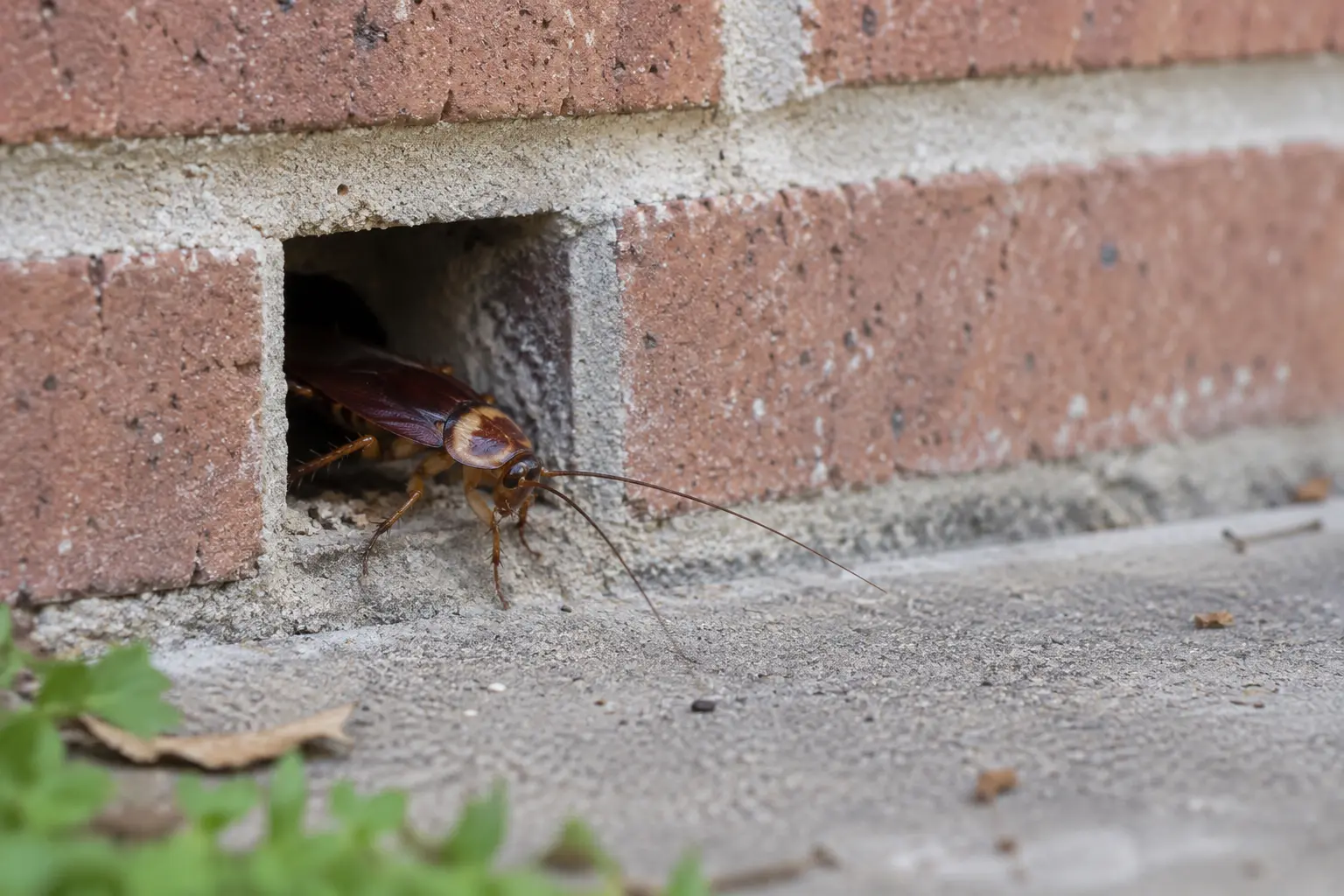
American and smokybrown cockroaches may use weep holes, wall voids, garages, attics, plumbing areas, and other protected spaces as temperatures change.
Carpenter ants — concealed travel routes
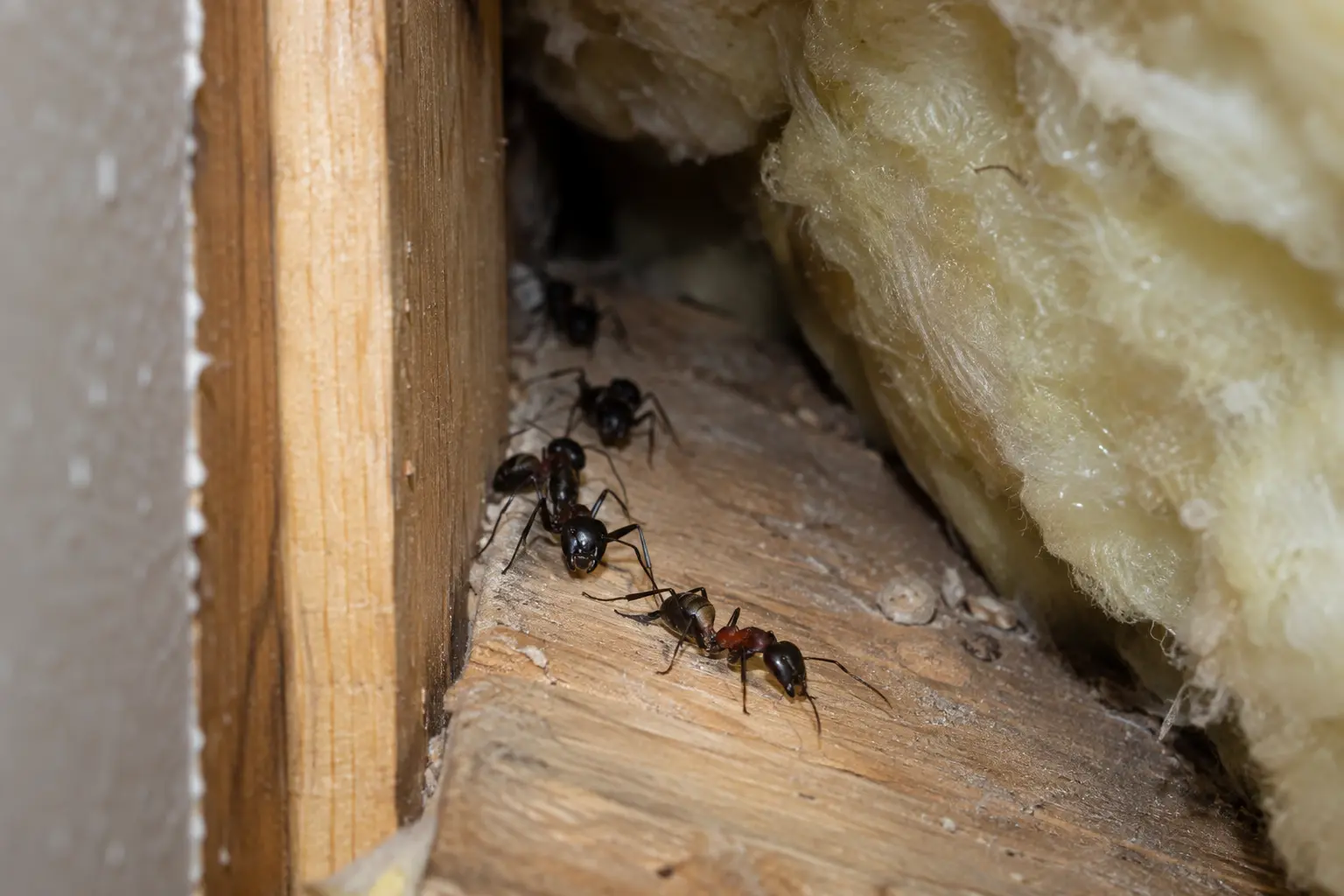
Carpenter ants can travel through narrow structural gaps and existing cavities, especially near moisture. Their activity may become more noticeable again in late winter.
Roof rats — attic and roofline access
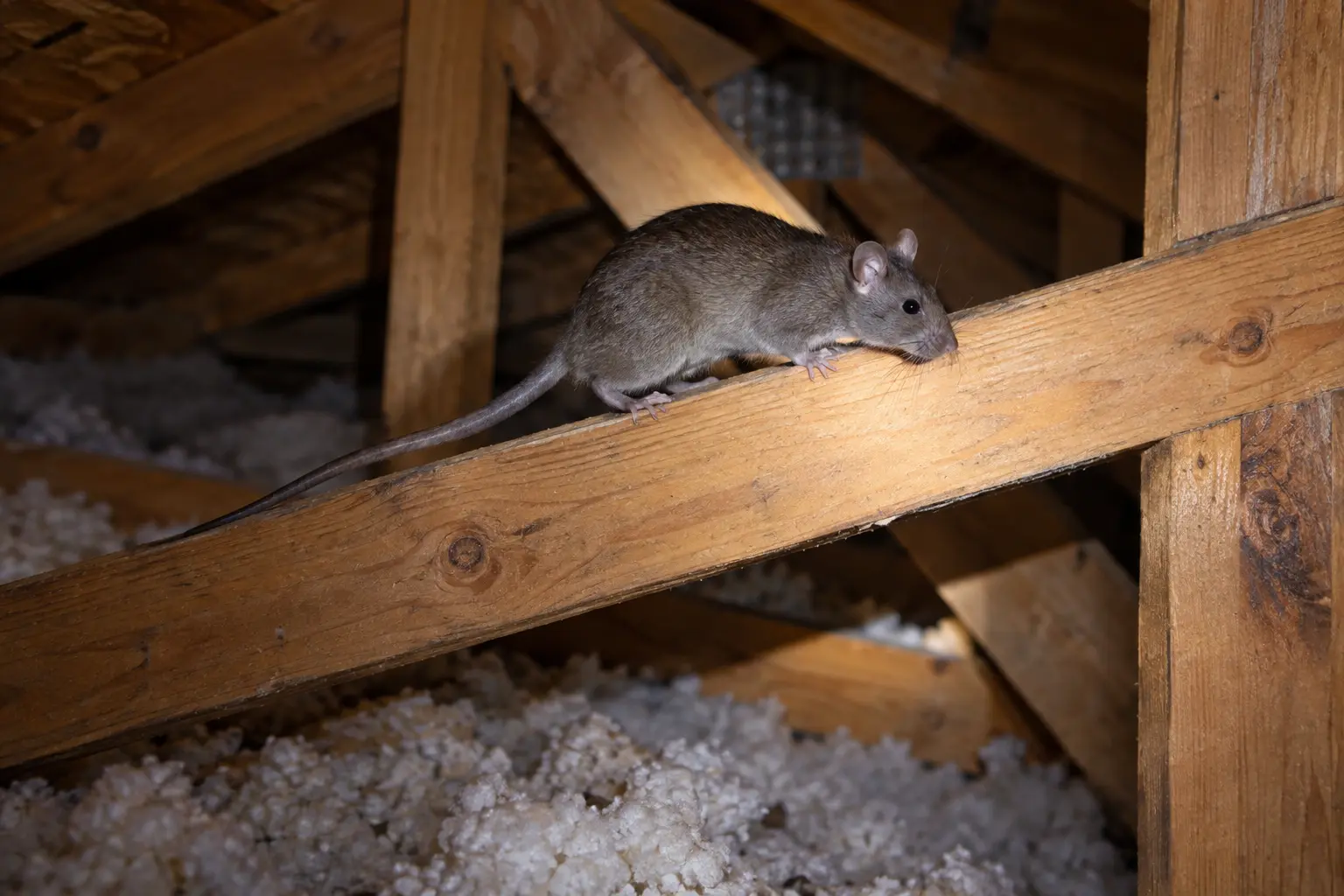
Roof rats investigate rooflines, soffits, siding gaps, utility penetrations, and nearby tree branches while looking for food, shelter, and nesting locations.
Mosquitoes — warm periods and moisture
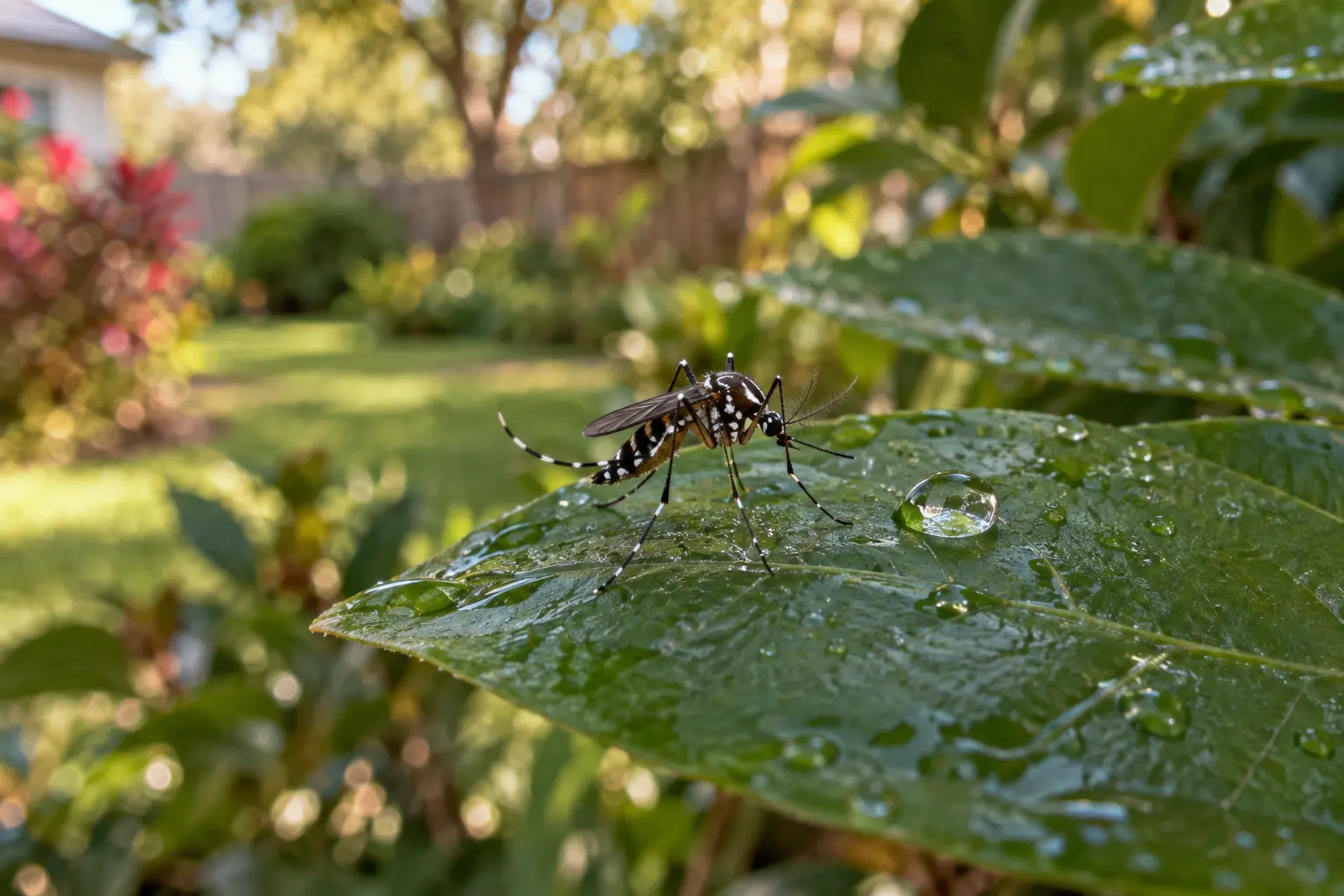
Houston’s mild winter weather can include warm afternoons. When moisture and standing water remain available, mosquito activity can continue or return quickly.
Step 1: We look for the conditions pests are following
When property conditions call for it, our Certified Applicators use thermal imaging to identify surface-temperature patterns that may point to moisture, air movement, insulation gaps, or other hidden conditions.
Thermal imaging does not see through walls. It gives us a smarter starting point by showing where conditions differ from the surrounding area. Instead of guessing, we can focus the inspection where the evidence leads us.
Step 2: We verify what is happening inside the void
Once an area of concern is identified, a borescopic inspection camera can be used to look inside tight spaces that cannot be evaluated during a standard visual inspection.
The articulating camera helps us examine wall cavities, plumbing chases, structural gaps, and other concealed areas for moisture conditions, entry points, harborage, and the narrow travel routes we call pest highways.
This is the difference between treating where a pest was seen and understanding where it came from.
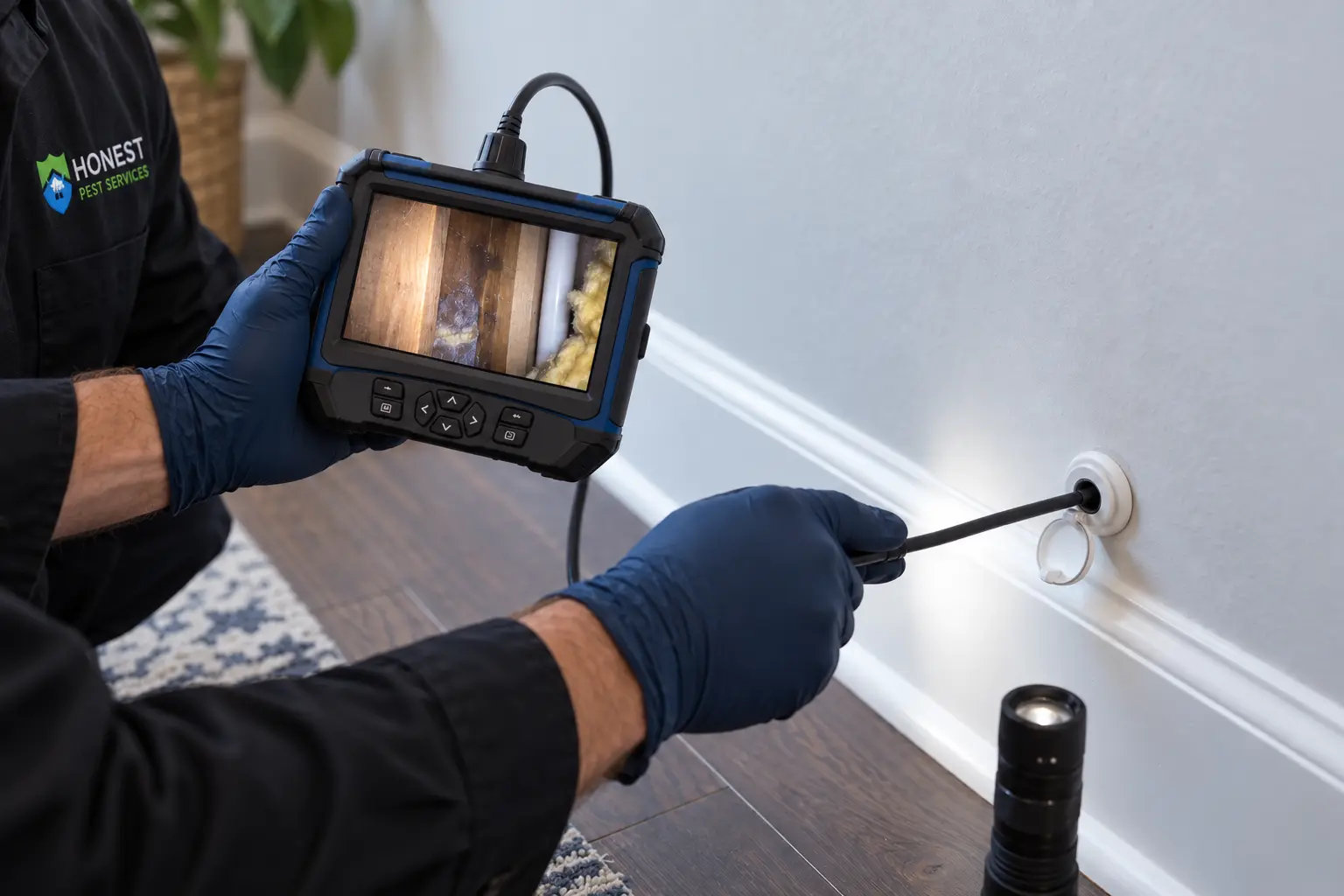
Precision inspection helps us understand where activity begins—not simply where a pest was last seen.
Step 3: We target the harborage—not the entire living space
If the inspection confirms a concealed problem, we may use professional wall-access injectors to reach the wall or ceiling void directly. Depending on the pest, property conditions, and product label, that may include a dust, foam, crack-and-crevice aerosol, or professional flush-out agent.
Flush-out agents help move hidden pests from cracks, voids, and harborage areas so our Certified Applicators can identify and address the source before populations build and begin moving into the living areas of the home.
Weep-hole flush-outs: bringing hidden activity into view
Brick weep holes are intentional openings near the bottom of a brick veneer. They allow moisture to drain and help the wall system breathe, so we do not plug or seal them.
Those same openings can provide inspection and treatment access to the concealed space behind the brick. When pest evidence, construction, weather, and the product label support it, a Certified Applicator may place a controlled application of professional flush-out agent into selected weep holes. The agent irritates insects hiding in the void and encourages them to move into view.
This can expose outdoor cockroaches, ants, spiders, and other insects using the wall cavity as a protected travel route or harborage area. Seeing what emerges—and where—helps us identify the pressure, determine how the pests are moving, and select the proper follow-up treatment instead of blindly spraying the exterior.
A weep-hole flush-out is not performed automatically at every home. It is a diagnostic and treatment technique used only where appropriate, and all applications follow the product label while leaving the weep hole open and functional.
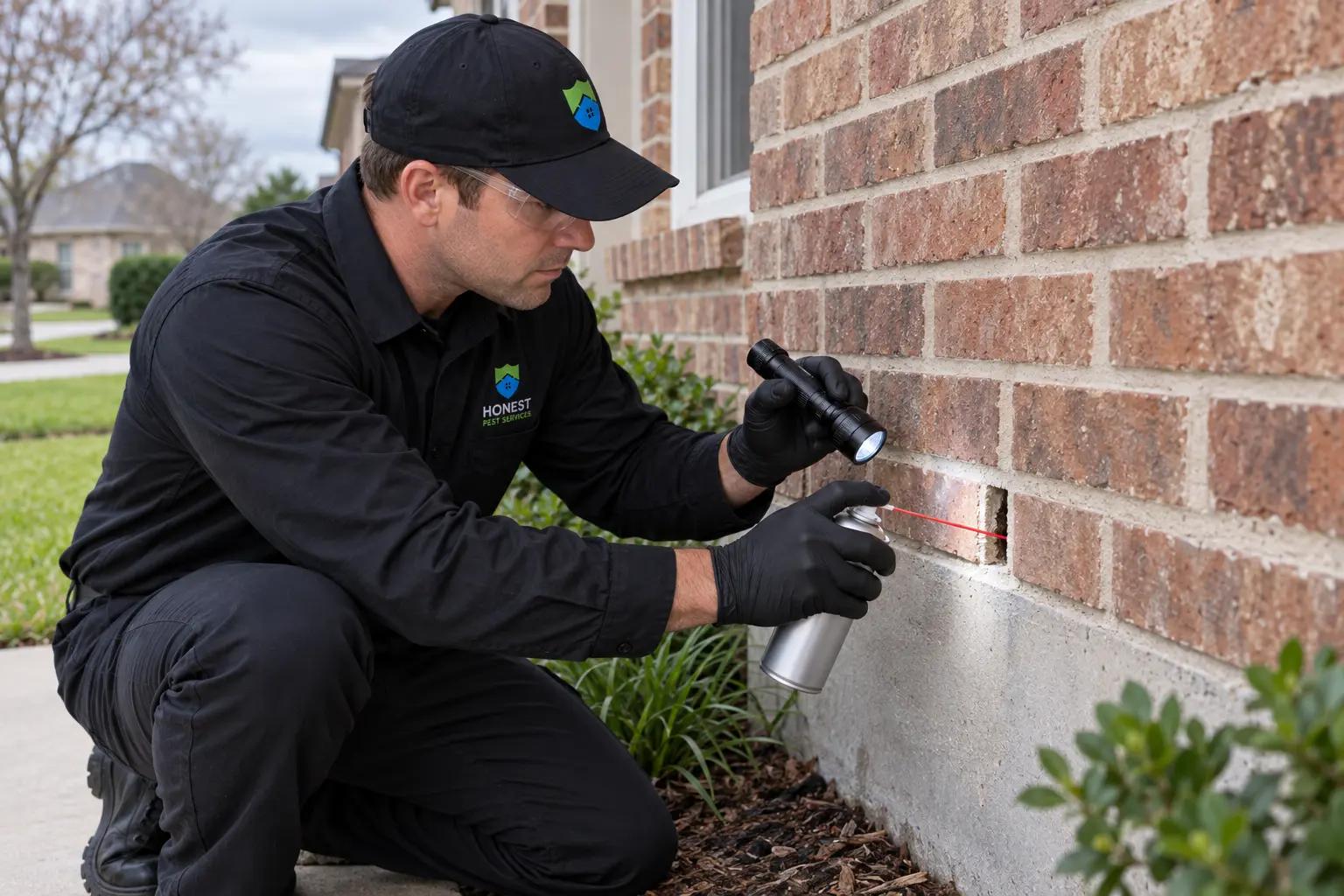
Selected weep holes give our Certified Applicators controlled access to inspect and expose concealed pest activity without sealing the drainage opening.
Every property is different. These tools are used only when the inspection supports their use, and all products are applied according to their labels.
Step 4: We monitor the response and adjust
A precision treatment is not the end of the process. We continue monitoring activity, checking conducive conditions, and adjusting the treatment strategy based on what the property is telling us.
You may briefly notice increased pest activity after a flush-out treatment because insects are being pushed from protected spaces. That does not mean the treatment failed. It means the hidden activity has been disturbed and exposed. If you see activity after service, contact us instead of applying an over-the-counter product on top of the professional treatment.
Mosquito Protection Does Not Stop in Winter
Houston’s cooler months do not always stay cold. Warm afternoons, rain, irrigation, shaded vegetation, and standing water can allow mosquito activity to continue or return quickly.
Instead of servicing the smaller Inzecto® traps used during warmer periods, our winter strategy transitions to a larger, discreetly placed mosquito station. The larger pod holds more attractant and provides a stronger, longer-lasting lure during the cooler months.
This approach allows us to keep pressure on the population before spring. We are not waiting for the first warm stretch and a new wave of activity—we are already working to interrupt the next cycle.
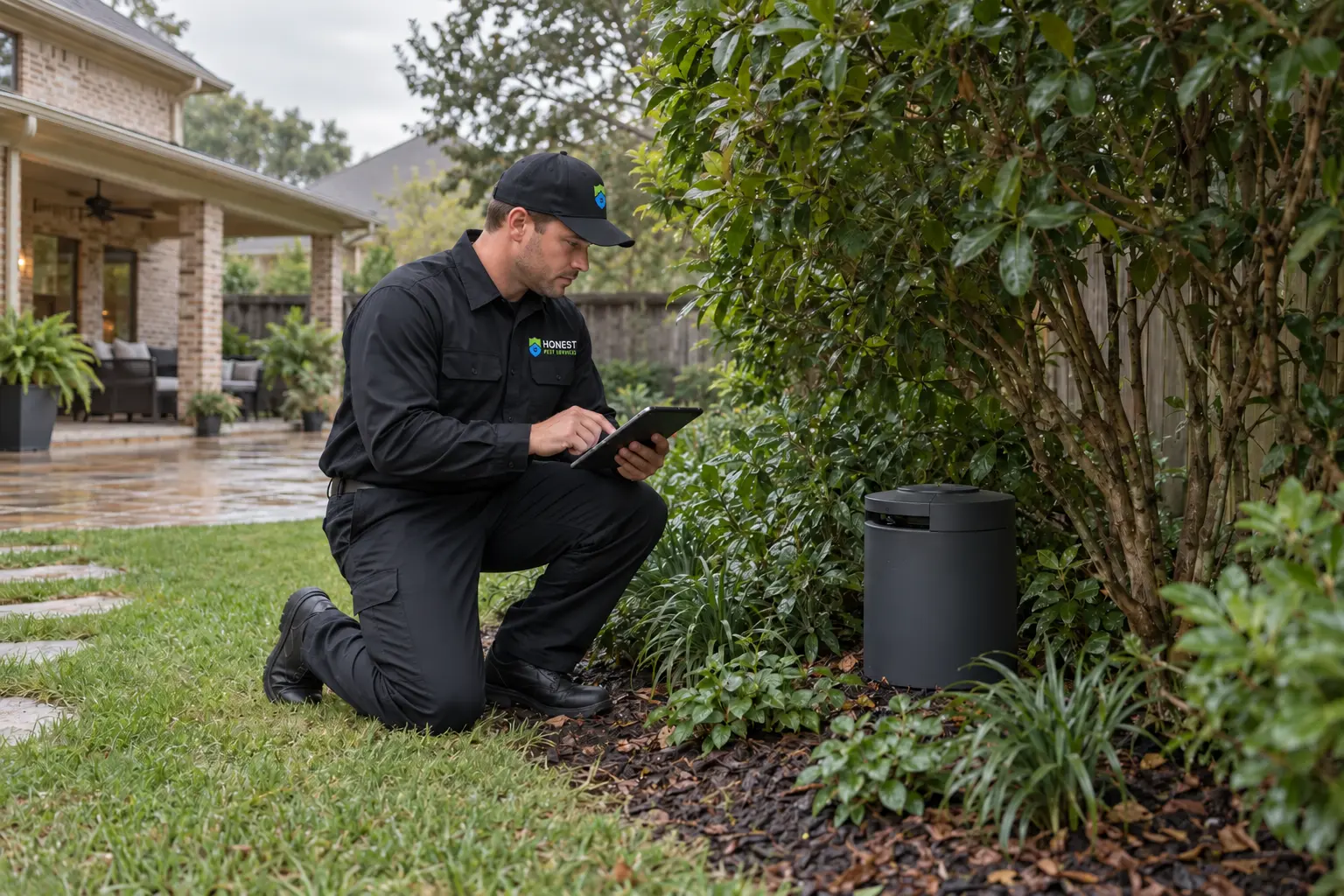
A larger winter station keeps mosquito pressure reduction working through Houston’s cooler months.
What You Can Expect From November Through February
- A treatment plan that changes with seasonal pest behavior
- Thermal imaging when conditions indicate a hidden concern
- Borescopic inspection of selected wall voids and concealed spaces
- Targeted wall-void treatment when supported by inspection findings
- Controlled weep-hole flush-outs when evidence and the product label support them
- Professional flush-out agents when appropriate for the pest and location
- Continued monitoring of moisture, entry points, and pest travel routes
- A larger winter mosquito station for customers enrolled in Mosquito Protection
- Clear explanations from a Texas Department of Agriculture Certified Applicator
Why year-round protection still matters
Pest activity never fully stops—it relocates, slows down, or moves into places you cannot easily see. Consistent protection allows us to catch those changes early instead of waiting for the next population surge.
- Prevention is easier—and usually less disruptive—than correcting an established infestation.
- Routine monitoring helps reduce pest-related health risks, allergens, and contamination.
- Early detection helps protect the home from damage caused by termites, rodents, and moisture-related conditions.
- A seasonal strategy keeps protection aligned with what pests are actually doing now.
The Honest Bottom Line
Cooler weather should change the strategy—not stop the service.
We do not treat your home simply because the calendar says it is time. We inspect, identify, explain, and then apply the treatment that fits the conditions we find.
At Honest Pest Services, we believe in staying one step ahead.
Proactive is always better than reactive.
—Honest Pest Services
Service methods and products vary by pest, property conditions, product label, and enrollment. Thermal imaging identifies surface-temperature differences and does not see through walls. All pesticide applications are performed according to label directions.